
Patrick Rothfuss' (Unofficial) Masterclass on World Building Through Character
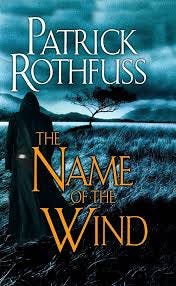
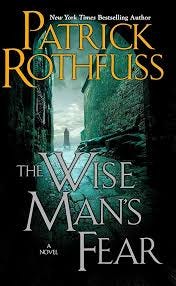
Examining Rothfuss' seminal fantasy novels, The Name of the Wind, and The Wise Man's Fear

Kevin Carver is the published author of The Forbidden Parallel, the first in an epic fantasy and science fiction trilogy, and founding musician of Kevin Carver & The Parallels.
The Unofficial Masterclass series explores Kevin’s key learnings from his favorite writers, novels, short stories, and poems.

In the United States, not all speech is protected by the First Amendment. Hate speech. Obscenities. You may have heard that one cannot shout “fire” into a crowded theater if there really isn’t one, and this is true. There are other, less-known exceptions to the First Amendment. For example: Yell “Patrick Rothfuss” into a crowded bookstore, and you are likely to get attacked and arrested.
That last one is a joke. (I think?)
I’m relatively brand new to Patrick Rothfuss. Though I had heard of his books, it took me until this year to read The Name of the Wind and The Wise Man’s Fear, which I tore through back-to-back. I’m not proud of how long it took me to finally get to these books. As a published fantasy author, it’s my job to read my genre’s bestsellers and truly understand the market. I don’t always do a great job of that. In my defense, I’m a sucker for returning to the classics and stumbling upon golden-era fantasy and sci-fi mass-market books. My go-to authors are Arthur C. Clarke, Ursula K Le Guin, Robert A. Heinlen, Tolkien, Bradbury, Steinbeck, Crichton, Shakespeare, Hemmingway, etc.
All this to say, I recognize I still have some catching up to do.
“Siri: what is a ‘Brandon Sanderson’?”
So keep in mind, I am embracing Rothfuss’ work relatively cold, meaning I have very little opinions or sensitivities toward his fraught relationship with his longtime fans. I won’t be covering all that here.
You can Google that.
So, let’s shake off the drama, don our University robes, and jump into text, shall we?
As an active reader, what really stood out to me was Rothfuss’ excellence at crafting rich ancillary characters: Abenthy, Trapis, Simmon, Ambrose, Auri, Devi, Sleat. These characters did more than just advance the plot (in fact, some don’t do that at all). They colored the world, enriched it. They expanded the reader’s perspective without exhaustive exposition dumps.
In short: these ancillary characters built the world.
It’s such a simple concept but easy to miss. In fact, it’s a lesson many authors can learn from. Even me. Especially me. After reading Rothfuss’ work, I yearned to revisit my debut novel and rip out a few of its chapters, but you live and you learn. :)
Without further ado, here’s the latest in my series (Unofficial) Masterclass, which posits that there is something to learn from every book.
Patrick Rothfuss’ (Unofficial) Masterclass
I want to start by saying that I found neither book of Rothfuss’ Kingkiller Chronicle series to be perfect. As I mentioned in my Goodreads review, there were a few story decisions I didn’t love, and the main protagonist, Kvothe, is a little too cool for school. I only mention this to show that I’m not approaching this analysis with anything close to a fandom bias. That said, I really did enjoy the ride, especially the story’s magic system and the emphasis on music. And for the most part, the prose was delectable.
But as I mentioned above, what really left an impression with me was his commitment to world build through character. Here are a few examples with some practical lessons for the studious writer. Enjoy!
Lesson One: The mentor teaches the protagonist… and us
Abenthy (Ben) plays the well-worn role of the mentor in Kvothe’s hero’s journey. He’s an old traveler who joins the troupe and begins to teach and prepare young Kvothe for his upcoming adventure.
Ben’s presence is short-lived, but he does enormous world-building work. Through his natural dialogue, teaching, and brief scenes, we learn:
Sympathy (the magic system) has rules, dangers, and philosophy.
There are arcanists who travel.
The Chandrian are taboo.
Names have metaphysical weight.
There are institutions like the University long before we see it.
His casual competence implies a world where magic is studied, regulated, and dangerous. His warning about Lanre, for example, makes the world feel old and layered with forgotten catastrophes.
“He didn’t sell his soul,” Ben said. “That’s just nonsense.” … “Suppose you have a thoughtless six-year-old. What harm can he do?” … “Suppose he’s twenty, and still thoughtless, how dangerous is he?” … “What if you give him a sword?”
Important: Ben’s teaching doesn’t have a painfully overt world-building agenda; it’s just simply teaching. It’s as natural as you explaining traffic lights to a four year old. But what’s brilliant is that every lesson brings us deeper into this complex, layered world. We ask more questions. We listen. We learn.
The takeaway here is to introduce the world through people who belong to it. A mentor with lived-in familiarity feels more real than a narrator explaining history.
Lesson Two: Trapis and Auri show who survives at the edges of power.
The University tells us about education. Tarbean tells us about poverty. But Trapis and Auri make the world moral.
Trapis is a humble caretaker of orphans in Tarbean who offers food, shelter, and quiet moral instruction, a compassionate soul surviving where institutions have failed. Auri is a fragile, luminous girl living in the forgotten Underthing beneath the University. Though these characters don’t share any scenes, I thought they both did a great job of showing what I call the Forgotten Underground. Not the blackmarket underground (see Lesson Four), but a literal underground. Ordinary people at the edges of power.
Trapis’ basement shelter shows us that there are no safety nets for the poor, other than ordinary people helping those in need. There are no Catholic Charities. There are no 501(c)(3) non-profits. In Tarbean, there is only Trapis caring for forgotten orphans, and that says more than any long-winded exposition dump every could.
Arguably, Trapis’ also plants a narrative seed for Auri, showing us why Kvothe will eventually be drawn to care for Auri, who is a vulnerable girl living underground.
The takeaway here is if you want your world to feel real, try to show who survives at the edges of power. People are more interesting than institutions.
Lesson Three: Ambrose and Simmon develop the class system… and apply pressure to it.
Rothfuss could have yapped at us forever about wealth and class inequality in his world. He could’ve written dissertation-like chapters on the prevailing economic system, explaining the cost of each noble’s cufflink or every strand of silk, and then compared them to the average income per non-nobility.
Instead, we are given Ambrose. Ambrose is a wealthy, vindictive noble and Kvothe’s chief rival at the University. He’s also a real jerk. He embodies the weaponized privilege of the aristocracy, showing how power, money, and influence distort justice.
While, at times, Ambrose is more of a caricature than a character, one can’t deny that Ambrose’s primary job is to represent Rothfuss’ Top 1%. But Ambrose is also effective as a world-building tool, because through him we also learn:
The nobility holds legal power.
Wealth can manipulate justice.
The University is not insulated from politics.
Reputation is currency.
Contrast for a moment with Simmon. Simmon is a BFF of Kvothe. He’s a gentle nobleman and University student whose warmth and decency contrast sharply with aristocratic cruelty. Through Simmon, we are given an important counter-balance.
Simmon shows us:
Not all nobles are the same.
Class affects worldview but not belonging.
“Second sons” can find a home in scholarship.
The takeaway here is that big ideas don’t always require big swings. For example, class warfare doesn’t have to be kingdoms falling and parents murdered. Have one’s privilege ruin someone else’s day. Build tension. Make it personal.
Lesson Four: A living world has loopholes; Devi and Sleat reveal its underground.
In terms of developing an underground, Devi is the obvious choice to start with.
She is a brilliant former student turned illicit moneylender operating outside the University’s authority, exposing the black-market economy of knowledge and the reality that power thrives beyond institutional approval. She is a key recurring character in both books, showing us:
Moneylending is a dangerous game.
There are alternative professions and pathways for expelled students.
Blood is a potent ingredient in Rothfuss’ magic system.
But for the sake of this exercise, I really loved Sleat.
In fact, the whole idea for this masterclass popped in my head after Sleat.
Sleat—coming from a small passage in The Wise Man’s Fear—is a quiet fixer who supplies contraband goods to desperate students. He’s the one who sources a crossbow for Kvothe.
Through Sleat we learn:
A “gray-market” supply chain is required in this world.
If Sleat is this close to the University, then other students and professors likely use him too.
Time-to-delivery is the primary driver of cost.
Sleat’s scene doesn’t even fill an entire chapter, but his presence so effectively develops the world further, illuminating a new dark corner in this splintering society.
The takeaway here is for every official system, invent its workaround. The more competent the underground, the more believable the world. Even small scenes with passing characters can widely expand a society’s bounds.
Lesson Five: Master Elodin grows the world by resisting explanation.
Elodin is a University professor or “Master.” He is the eccentric Master Namer whose teaching style borders on madness. Basically, he is the Mad Hatter of the faculty; in fact, reread any of Elodin’s lessons and I guarantee that Kvothe’s dizzying brain will remind you Alice trying to reach for a cup of the Mad Hatter’s elusive tea.
Goddammit,” Elodin said. He stalked over to the bundle of seeds, picked it up, and waved it around vigorously until the air was full of gently floating puffs of milkweed seed.
Then Elodin started to chase the seeds wildly around the room, trying to snatch them out of the air with his hands. He clambered over chairs, ran across the lecturer’s dais, and jumped onto the table at the front of the room.
All the while he grabbed at the seeds. At first he did it one-handed, like you’d catch a ball. But he met with no success, and so he started clapping at them, the way you’d swat a fly. When this didn’t work either, he tried to catch them with both hands, the way a child might cup a firefly out of the air.
But he couldn’t get hold of one. The more he chased, the more frantic he became, the faster he ran, the wilder he grabbed. This went on for a full minute. Two minutes. Five minutes. Ten.

Through Elodin, scholarship becomes less rationale, and the deeper, wilder mysteries of the world remain untamed.
We also learn:
The University itself does not fully understand Naming, and thus the study of it is less respected by those who pursue more traditional scholastic paths.
Masters are given a wide berth with little accountability.
Madness and genius are adjacent (also introduced via Abenthy, but less so).
“Sympathy” is the prevailing magic system in the text, a measurable and procedural magic. Naming is not. Naming is a mystery.
But Elodin plays an important role because at the end of the day he is still an authority figure. He shows us that Naming is a serious path of study, but to pursue it requires a more personal sacrifice: one’s own reputation.
Pursuing Naming is a commitment to chasing the wind and befriending madness.
The takeaway here is… Well, there are a few takeaways with Master Elodin. But the one that comes to mind now is that some ancillary characters exist to provide a protagonist with opportunity costs. More than just a fork in the road, these characters build the roads and the forks, and they force your protagonists to choose.
Thanks for reading!
That’s all for now. What did I miss? What do you disagree with? Which author should I study next? Let me know. Thanks, friends.
Kevin Carver is the published author of The Forbidden Parallel, the first in an epic fantasy and science fiction trilogy, and founding musician of Kevin Carver & The Parallels.
The Unofficial Masterclass series explores Kevin’s key learnings from his favorite writers, novels, short stories, and poems.